Wednesday, August 1, 2018

Passionate about Child Health and Wellness

by Noah Drew, JD and Vahista Ussery, MS, MBA, RDN
Co-leaders of the TCFPC Children's Working Group


In the United States, the percentage of children and adolescents affected by obesity has more than tripled since the 1970s. Data from 2015-2016 shows that nearly 1 in 5 school-age children and young people (6 to 19 years) in the United States has obesity.  As of 2018, more than 44 percent of children in the Fort Worth Independent School District were overweight or obese.

While genetics and physical activity play a part, a healthy diet is the keystone for maintaining a healthy weight. More than 90 percent of American children have poor diets. Some children have it harder than others, living in food deserts, where there are few nearby places for their parents to purchase healthy foods. Despite their economic situation, our overall environment sets a child up for failure when it comes to health. To help combat this problem, our mission is improving access to healthy foods for children at home, restaurants, schools and in the community.


Our Children’s Working Group is made up of members from a variety of backgrounds and areas of work, but all of us share a passion for children’s health. We are currently working on the following initiatives:

  •  Children’s Menu Program: We want to ensure children have healthy dining options when visiting restaurants in Tarrant County. Currently, many menus feature popular “kid foods,” but these foods do not provide the nutrition kids need. We hope to help increase fruit and vegetable options, decrease soda and other sweetened beverages, and promote healthier cooking techniques.
  • Summer Feeding Promotion: Many kids rely on the National School Lunch Program and other feeding programs throughout the school year. When summer begins, many have nothing to eat at home. Through the Seamless Summer Program and Summer Food Service Program, free meals are offered to children under age 18 throughout Tarrant County. Unfortunately, many families do not take advantage of these programs, so we hope to increase awareness and ensure we have less hungry kids in our county.
  • Vended Meal Food Quality Improvement: Many afterschool programs rely on vended meal companies to provide nutritious snacks and supper meals to children. We unfortunately have discovered a lack of quality with these meals, and plan to help improve the acceptability. The Tarrant Area Food Bank has already taken steps to ensure their vendors understand the importance of quality. They have modified their procurement procedures to require vendor sample meals, and are working with their current vendor to improve their offerings. We hope the Food Bank’s story will help to lead others to encourage other food vendors to make changes to their meals.

If any of these initiatives sound like something you would like to get involved with, please consider attending our next working group meeting. We would also love to hear feedback and other ideas!  

Monday, July 2, 2018

Local Partnership Reduces Food Waste


by Becca Knutson, TCFPC Board Member

Since January 2014, Tarrant Area Food Bank (TAFB) has operated their demonstration garden, The Learning Garden, on a residential lot owned by Ridglea Christian Church in the Ridglea North neighborhood. The garden serves the purpose of demonstrating several different types of growing methods, different materials that can be used and different watering techniques. From this garden, volunteers and staff work hard to grow fresh fruits and vegetables to donate to local food pantries. They also maintain a robust composting program that provides enough organic material to nurture the entire garden, year-round.

Community Composting

Composting is a very useful process that can be implemented in any garden. It involves taking garden waste, kitchen scraps, yard clippings, leaves and other discarded organic materials, combining them with water and air to encourage the process of decomposition. After a couple of months, the finished product is beautiful, organic material that will provide nutrients to the garden crops and help improve the soil tilth.

TAFB’s Learning Garden has been able to produce enough compost to supply all of its needs for the last two years, resulting in thousands of dollars in savings. While the composting program has been successful using contributions from the community and the garden, not having a consistent source of high-nitrogen “green” materials was the only thing keeping it from producing at capacity.

Gardener Marshall Harris adds vegetable scraps from the CSFW to the worm bin at TAFB's Learning Garden. Vermicomposting is one of several methods of breaking down organic matter like vegetable scraps into useful soil amendments for the garden. 


Clever Collaboration

On January 10, 2018, Edward Gutierrez of the Culinary School of Fort Worth (CSFTW) contacted Lauren Hickman, gardener at TAFB to find out if the two organizations could work together to reduce food waste. Edward suggested that CSFTW’s students start saving their compostable kitchen scraps to donate to TAFB’s compost piles. CSFTW is located on Camp Bowie Boulevard, less than a mile from TAFB’s Learning Garden which makes the relationship simple and convenient.

After a few conversations to work out the logistics, the two partners came up with an effective program that would benefit both organizations. Each week, students at CSFTW use small buckets at their workstations to collect any unused food scraps. When the buckets are full, the students empty their buckets into larger bins stored by the dumpsters. Then, each Tuesday before the regular volunteer workday at the Learning Garden, TAFB staff picks up two 33-gallon tubs full of fruit, veggie and grain scraps that will be used by volunteers in the compost piles.

Food scraps are added to a newly built compost pile and turned in, to the delight of billions of microbes. These bacteria, fungi, and other microscopic animals will transform the pile into useable compost over about 8 weeks using the hot composting method. 


As of June 2018, TAFB’s Learning Garden has incorporated approximately 790 gallons of food waste donated by CSFTW. The food waste is used by volunteers to build new compost piles during almost every workday. It also allows opportunities for Master Composters to earn volunteer hours by teaching others how to compost. The increased amount of compost produced will benefit TAFB’s Learning Garden by increasing production of fruits and vegetables and allow us to share compost resources in the future.

CSFTW also benefits from the partnership. Saving food scraps in separate containers facilitates instructor and student awareness of food waste. Instructors are also able to use the discarded produce to critique the student’s methods and provide teachable moments. Removing the food scraps from the waste stream also saves on dumpster space and diverts organic material from the landfill where it would not break back down into usable materials.
As TAFB and CSFTW continue to work together, the culinary students hope to be able to volunteer their time at the Learning Garden to learn more about growing their own fruits and vegetables. Eventually, the culinary school would like to have a garden of its own.

To find out more about TAFB’s Learning Garden and volunteer opportunities, please visit www.tafb.org/volunteer or register for a garden workshop at www.tarrantareafoodbank.eventbrite.com. Information about the Culinary School of Fort Worth can be found at www.csftw.edu.

Monday, June 6, 2016

What We're Planting Now - June 2016

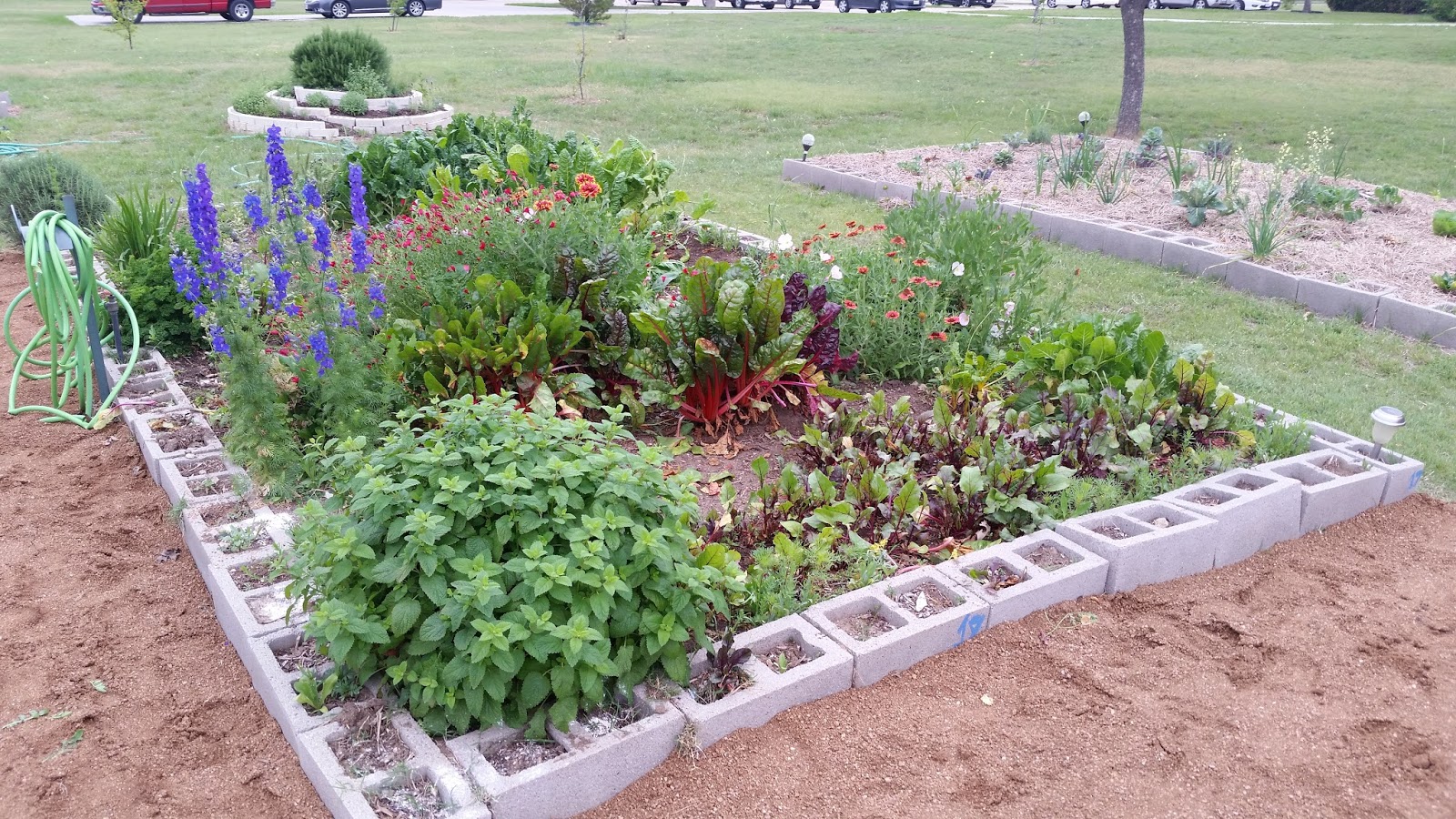
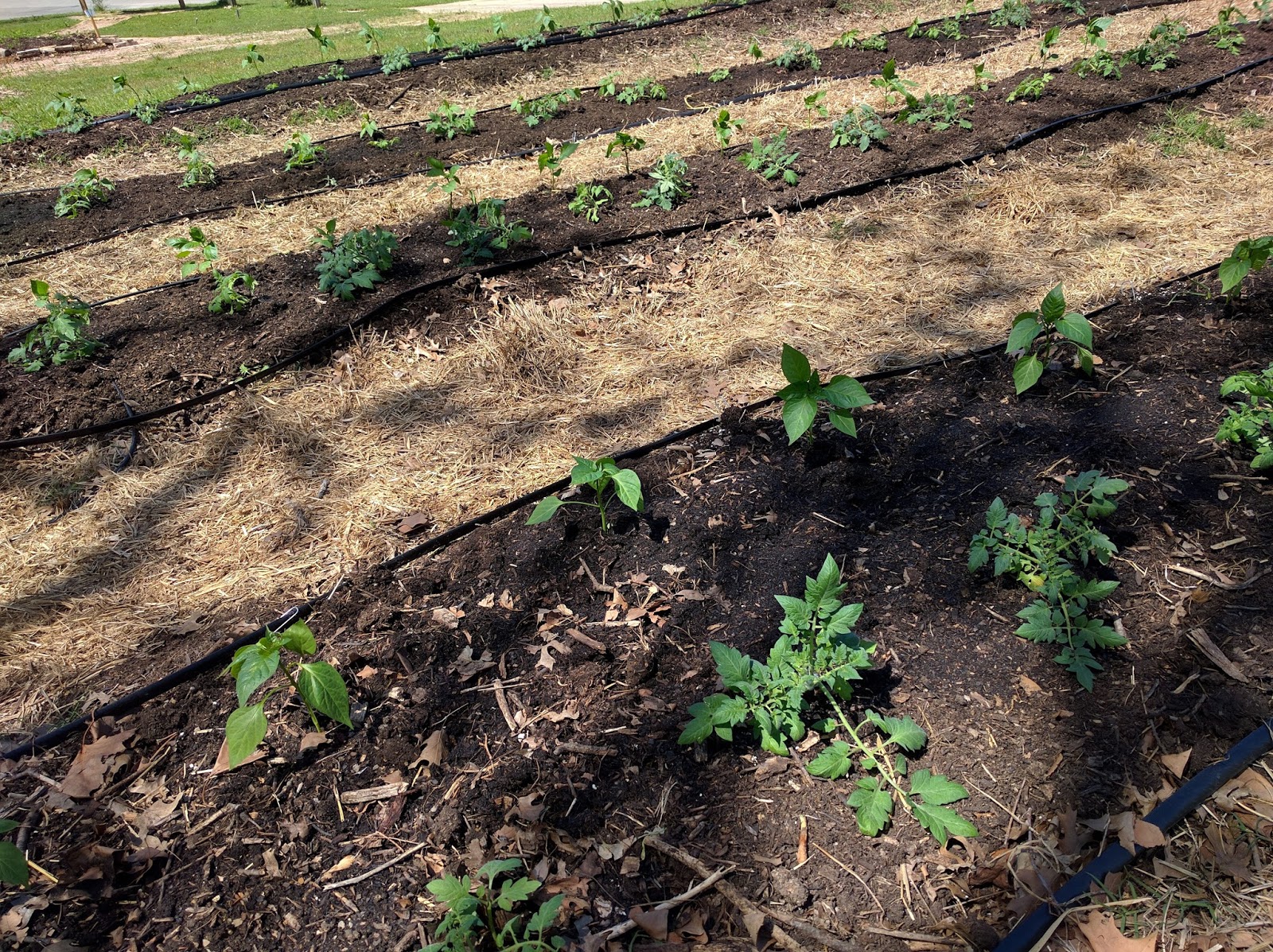
Gardens all over North TX are booming with all of the rain and sunshine we have been getting this Spring and early Summer. Tomatoes are beginning to ripen, peppers are starting to take off, and those who grow beans are not for a lack of the delicious legume.

Take a look at these DFW gardens and how well they are doing!

Tomatoes and Peppers doing well growing in rows!

Garlic is finally ready!

Malabar spinach season is a great time!

The native flowers are looking nice, too!
Stay up to date with the Community Garden and Urban Agriculture working group by visiting our website!

Join in on these local gardening events:

Monday, May 16, 2016

Garden of the Month - Multiple YMCA Locations (Fort Worth)

In September of 2013, the YMCA of Metropolitan Fort Worth received a grant from the Texas Department of Agriculture to create three community gardens and enhance an existing garden. The purpose of these gardens was to implement wellness and garden-based learning for three early learning centers and two Y branch afterschool programs for school age children. The Amon G Carter Jr Downtown YMCA’s social responsibility committee had discussed having a roof top garden for a few years.  With this grant, the rooftop garden was created as well as gardens at Amaka Childcare Center in the Butler Housing Community and the Eastside YMCA.  As well, enhancements were made to the existing community garden at the McDonald Southeast Y. Two of our gardens are in food deserts.

Kyle Amato of Community Cultivators has helped us forge the creation and sustainability of the Downtown Y rooftop gardens, and the additional gardens at the Eastside Y and McDonald Southeast Y.  He created classes for three branches and has weekly work times to help recruit and encourage volunteers to sustain these gardens.  Lorie Grandclaire-Diaz created the Amaka Garden and is working with the children as part of her yearly Master Gardener Project.  Four volunteers from the Master Gardner Mod Squad have taken on McDonald Southeast Y in Southeast Fort Worth for their project.  Their commitment and work is creating a beautiful space out of the existing garden to bring the predominately senior community together over food and cultivation.  We are seeing the fruits of our work. Each community is different so the process of each garden becoming its own unique culture is evolving. 


This work has brought great joy and energy to our children and members that are involved.  Please come bring your expertise and ideas to our gardens.  We would love for volunteers to come teach us more as we walk this path.  For information please call me; Karen Kelly 817-566-1066.


Youtube: https://youtu.be/j4pCPRpD3GU

Website: http://ymcafw.org/programs/communitygardenproject/


Friday, April 29, 2016

Garden of the Month - Alliance United Methodist Church (Fort Worth)

In far north Fort Worth, just south of Keller, where crazy-busy commutes intersect with rushing to kids’ sports and school and shopping, Alliance United Methodist Church anchors a small corner, traditional white steeple atop a red-brick sanctuary. If you drive up Park Vista, just north of Basswood, and look between the baseball backstop and the children’s playground, you’ll see Alliance’s community garden, where church members and neighbors have been donating more than 600 pounds in 2015 to 1,100 pounds of food in 2014 to the Keller Community Storehouse.
Ellen Neff, who coordinates Alliance’s community garden activities, says the garden does far more than just provide fresh vegetables. “I’ve talked with the staff at the Community Storehouse, and they have to teach some of their clients how to cook the fresh vegetables. It’s a wonderful feeling to know that we’re helping shape new lifestyles for people who needed a little help, kind of like we all do sometimes. It’s just one small way we can quietly share the love of Christ by feeding His people.”
The vision of Alliance United Methodist Church is to “connect, share and grow,” and the community garden has provided the perfect venue for all three. The garden contains about 21 plots, each tendered by church members, neighbors and small groups like the Boy Scouts or the church’s youth and children’s programs. It also features a small herb garden and a larger, circular community garden, where everyone pitches in for higher-producing crops for the Community Storehouse.
At the back of the property, the gardeners maintain a large compost bin, and at the back corner of the church’s Family Life Center, barrels collect rainwater for watering the gardens. Alliance’s gardeners are committing to using only organic fertilizers and weed and pest deterrents. On almost any evening, spring through fall, gardeners will be chatting about best practices for better-producing plants and the never-ending battle with birds and varmints that sample vegetables before the harvest.
The Alliance community garden has brought previously unconnected friends together, plus the church uses it for Easter and special mid-week worship. Last month, children from the church’s Wednesday night FaithWorks program planted vegetables, “made dirt” from the compost pile and took home hand-made Rosemary saches. And, in the midst of hectic suburban life, it’s become a quiet place for prayer, meditation and a little therapeutic digging in the dirt.


Monday, April 25, 2016

Advent Lutheran Church Community Garden Update

To celebrate Earth Day, we had a Community Garden Workday with Tucker Street Head Start Center on Saturday April 23.  Several staff and family members from the Head Start Center came and helped us weed, plant and water our garden.  We planted more peppers, cucumbers, tomatoes, herbs and loofah seedlings.  Our loofah seedlings were started from last year plant’s seeds.  Head Start families were eager to plant seeds and water the gardens.  It was a great day spent outside together! Tucker Head Start Center receives the produce harvested from this garden.


Tuesday, April 12, 2016

What We're Planting Now - April 2016

April has been quite the busy month in North TX! Some of us got our tomatoes and peppers planted earlier in the year, because of the mild winter, only to be set back by several different hail storms which seem to happen once a week, in some areas.


Bouncing back from the almost instant destruction the hail caused seems like it is taking forever. So, we plant on! Gardens all over North TX are planting - or replanting - their spring crops. Tomatoes, peppers, beans and melons. You can grow a little bit of everything in Texas!


Spring also means getting our support systems in place and even seeing the first of the artichoke crop coming in. What a fantastic place spring in North TX is!


Keep us up to date with what is going on at your community garden by visiting our working group page!

Don't forget to check out these local gardening events - stay connected to your gardening community!